
The seller, such as IKEA
Product facts, public pages and owned inquiry paths
USE CASE 03 / B2B OFFICE PROCUREMENT
Independent IKEA illustration · Supplier-side proposed pilot · Not a client case
MuseBridge works for the seller. Using IKEA office procurement as an illustration, we test how buyer needs meet product facts—and propose a clearer path from evaluation to a useful business inquiry.
See what the seller gets ↘The buyer task is our test. The supplier receives the work.

Product facts, public pages and owned inquiry paths
Requirements, hard constraints and inquiry tasks
Demand map → evidence → path retest
01 / AI PROCUREMENT EXISTS. THE SUPPLIER ROLE IS DIFFERENT.
These are separate market examples, attributed to their providers. They do not show IKEA adopting these tools or MuseBridge being integrated with them.
Pactum reports Walmart using AI supplier negotiations within buyer-defined commercial rules.
Proposed supplier-side contribution: organize approved terms, exclusions and an escalation path. Buyer invitation and approval still govern access.
Fairmarkit’s bp case describes automating manual sourcing and supplier requirements.
Proposed contribution: make capability and quote inputs complete. Participation in a private sourcing event requires invitation or onboarding.
Xometry describes AI-supported custom-part pricing, manufacturing feedback and supplier matching from CAD inputs.
Proposed contribution: map custom requirements to verified capability fields and RFQ inputs. Geometry analysis and quotation remain the manufacturing platform’s job.
These examples show automation at distinct procurement stages. They do not establish that page improvements alone admit a supplier to a procurement system. The IKEA illustration below makes the seller-side work concrete.
02 / TEST A BUYER TASK. DELIVER TO THE SELLER.
Switch the buyer requirement to see the supplier-side finding, proposed improvement and handoff decision. Written illustrations—not agent runs or captured leads.
Furnish a US office for 20 people. Budget: $15,000 including desks, chairs, storage and services. Seated work is sufficient; target opening in four weeks.
EXAMPLE CANDIDATES / NOT A COMPLETE OFFICE PLAN
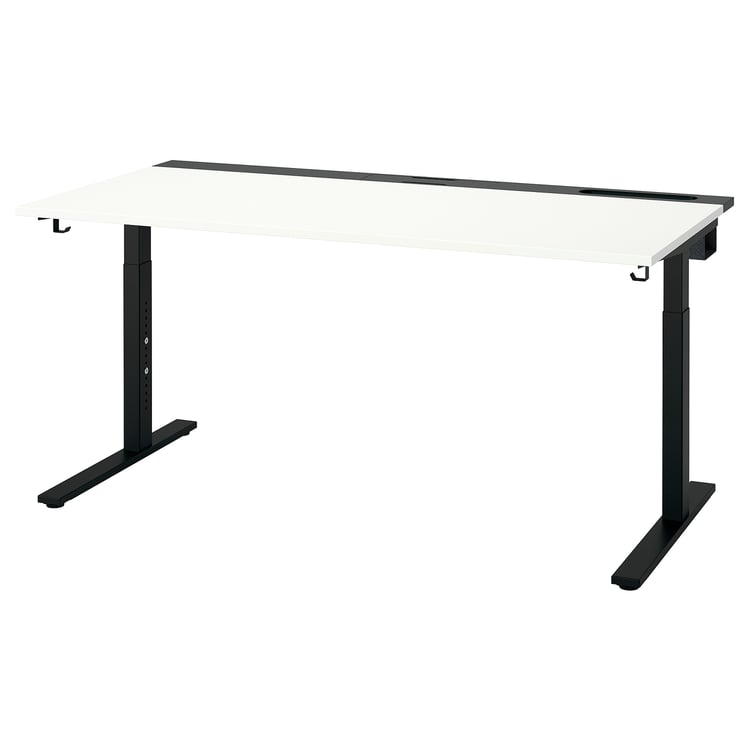
MITTZON · white/black · 63 × 31½ in
Desk specifications ↗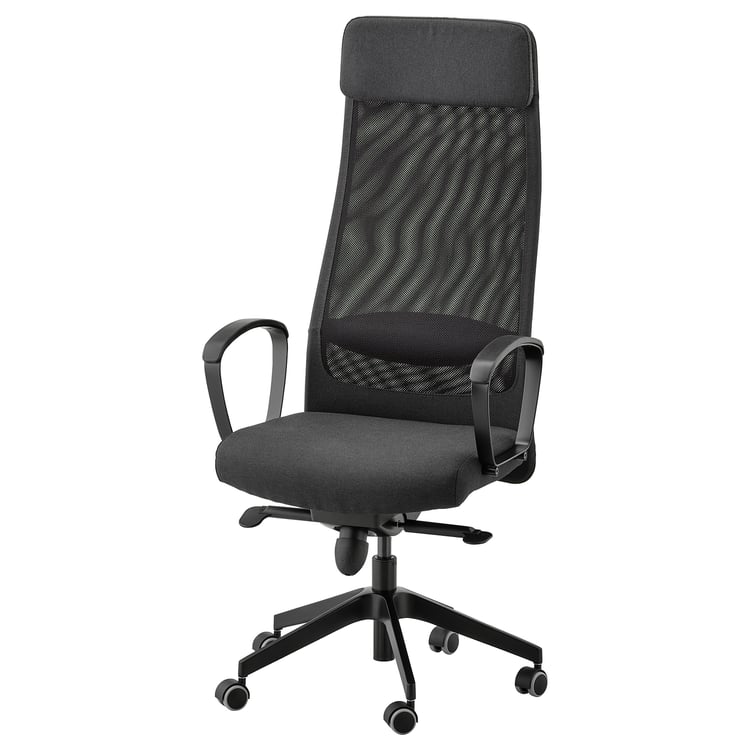
MARKUS · Vissle dark gray · Medium
Chair specifications ↗A short product summary alone does not answer a project brief. This simplified input is a teaching contrast, not an audit finding about IKEA.
Organize the selected desk’s dimensions and adjustment mechanism with the office-service path. Ask for the room plan and project location before your team confirms a solution.
Seller deliverable: a requirement-to-evidence map plus missing fields for the inquiry form. A submitted inquiry still needs sales review.
03 / REQUIREMENT → EVIDENCE → SELLER ACTION
IKEA already publishes these product and service facts. MuseBridge’s proposed contribution is task-focused organization and testing, with supplier approval before any changes.
| Buyer requirement | Evidence to use | Supplier action / confirmation |
|---|---|---|
| Is this an electric sit/stand desk? | No. The selected MITTZON variant requires leg reassembly to change height. | For electric adjustment, review a different variant. |
| Will twenty workstations fit? | Desk dimensions: 63 × 31½ inches. | Room plan, clearances, access and the final furniture layout. |
| Can this project fit the $15,000 budget? | Seated candidate price snapshot: 20 desks at $379.99 + 20 chairs at $299.99 = $13,599.60. | Only $1,400.40 remains for storage, tax, delivery and assembly. Recheck prices and quote the full scope. Electric alternatives require a new estimate. |
| Can it be ready in four weeks? | Business assistance and assembly options are published. | ZIP code, stock for twenty units, delivery dates and assembly slots. |
04 / A SCOPED SERVICE FOR THE SELLER
Assisted testing and review, scoped by product family, market, source access and endpoint. This case proposes the work; it has not been delivered to IKEA.
Use approved buyer questions and public sources to define test tasks. Separate demand themes from identifiable, actual inquiries.
Seller receives: task set + evidence gapsDraft task-focused copy, precise FAQs, identity fields and an inquiry path. Publish only facts the supplier approves.
Seller receives: content + path change planRepeat comparable tasks. Check correct fit, exclusions and missing information; review actual submitted inquiries separately.
Seller receives: test record + follow-up checklist05 / FROM UNDERSTANDING TO INQUIRY
MuseBridge works for the seller: make products easier to find, answer and evaluate, then help authorized AI use an inquiry path. AAO asks what happens after interest: can the buyer’s requirements reach sales accurately and completely?
AAO means AI Agent Optimization—MuseBridge’s working definition here. These four scopes overlap and can address individual problems; they are not a required four-tier package.
Define tasks around the variant, budget and deadline. Use the Shopping Simulator’s controlled testing method to examine fact gaps, wrong-fit decisions and inquiry barriers. Deliver evidence, priorities and a plan; actual edits and retests follow the agreed scope.
Seller value: fewer mismatches, less clarification, earlier fit decisions.If live stock, quotes or CRM handoff are needed, confirm sources, interfaces, permissions and human review before scoped implementation and acceptance. An existing inquiry page can be the starting point. This demo connects to neither IKEA systems nor Muse.
Seller value: a clearer route from complete requirements to a traceable sales process.The aim is to reduce gaps between evaluation and inquiry, helping sellers receive more relevant, complete requirements. Draft completeness and wrong-variant exclusion are test metrics; real inquiries, sales acceptance and orders are counted separately. This illustration has no measured acquisition or conversion lift.
06 / DEMAND CAPTURE THAT SALES CAN USE
On a supplier-owned inquiry path, ask for the actual requirement and preserve what is missing. This local demo prepares a sales handoff from the selected fictional task; it is not a real lead.
Use themes to define content and tasks; do not infer buyer identity or that a named company is buying.
Preserve the declared need; clarify quantity, location, budget and date, then review with sales.
Provide data under the buyer’s onboarding and field rules. Connections require separate implementation.
A demand theme is not an identifiable lead; a structured inquiry is not a sales-accepted opportunity. Private external-AI conversations are unavailable without authorized access.
A requirement record for sales review. Identity, contact, consent and supplier acceptance are still needed before it can be a real qualified opportunity.
Reference: IKEA business inquiry path ↗07 / OUR PLACE IN AN AI PROCUREMENT JOURNEY
A conditional scenario, not a claim of launched Muse B2B features or a partnership. Select a stage to see supplier-side work and its boundaries.
The scope to agree is assisted task design, public-source review, proposed content/path improvements and a retest plan. Actual runs, implementation and platform access are confirmed individually. Authorized inquiry review can be assisted manually; automated lead capture, CRM/ERP synchronization and buyer-facing APIs or agent interfaces remain proposals in this case, not delivered connections.
08 / VERIFY THE WORK AND BUSINESS SIGNALS
Useful content and a completed simulation are different from a captured inquiry or order. This case has no customer deployment, AI test results or business outcome data.
Approved facts, demand map, proposed page and inquiry-field changes.
Proposed workEvidence-backed judgments and unresolved conditions under comparable tests.
No run in this caseActual dated searches and AI mentions on agreed accessible surfaces.
Not observed for IKEAConsented inquiry completeness, sales acceptance, quotes and orders.
No real lead in this demoA SUPPLIER-SIDE ROLE IN AI-ASSISTED PROCUREMENT.
Start with one product family and the buyer questions that matter. Agree a pilot to inspect, improve and retest the path to a useful inquiry.
Discuss a supplier pilot ↗CONTEXT & NEXT STEPS
A business buyer may need to verify quantities, commercial terms, delivery conditions, product suitability, and a route to request a quote. This independent IKEA illustration examines the supplier side of that process. It connects a defined procurement brief to evidence that a sales team can check and a handoff it can act on.
The scenario is not an IKEA customer case or a claim that Muse currently provides every B2B procurement capability shown. The page distinguishes real external procurement applications from proposed MuseBridge work. A prepared demand record is not a verified lead; a real inquiry requires an actual buyer action and an agreed way to measure it.